Chores Set Kids Up for Success
Should you involve your kids in tidying? Research shows that giving children chores is a key predictor to their success as adults.
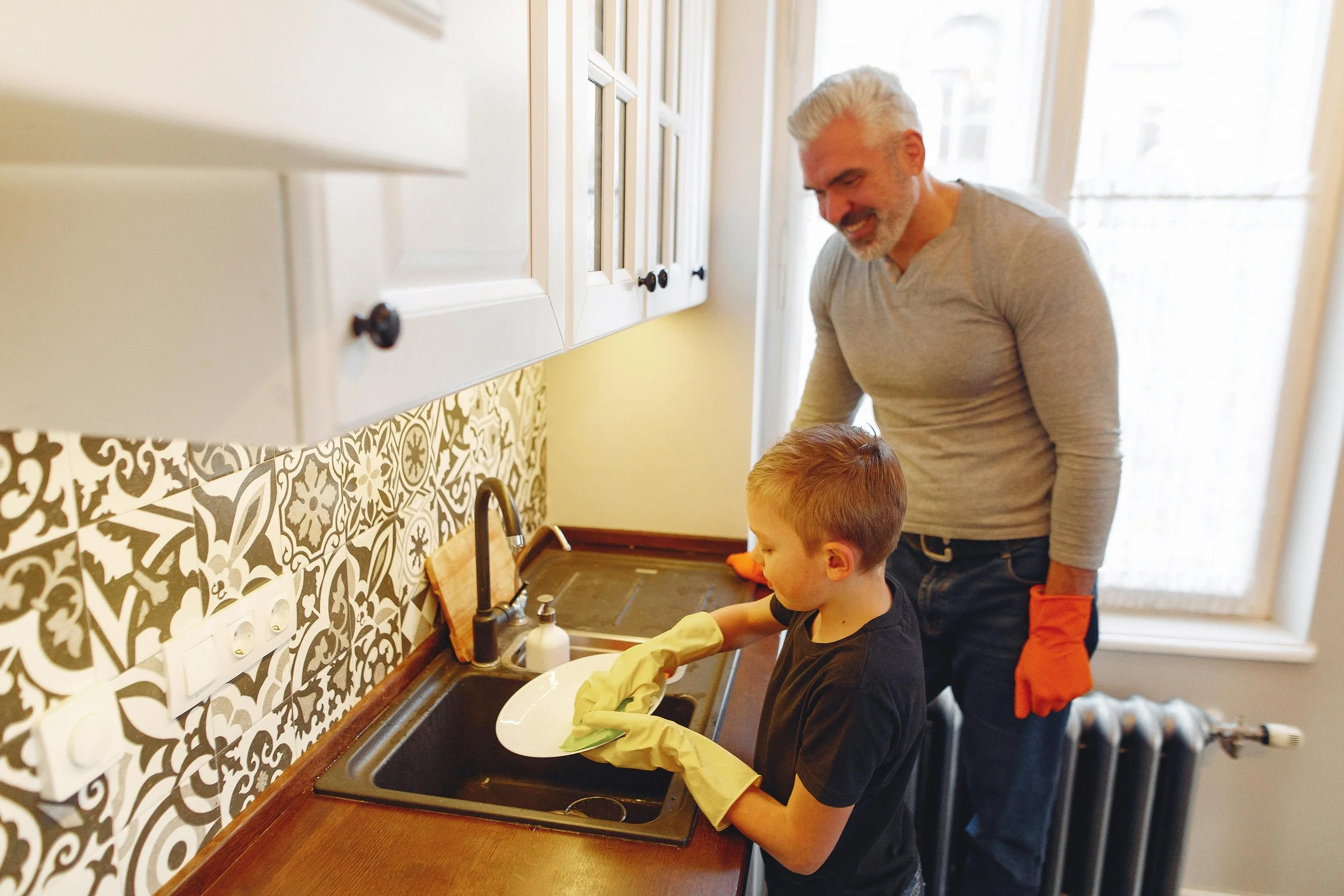
One of the biggest questions parents have about organizing and keeping a home tidy is whether and how much to involve their kids in the process. I learned so much when I was a kid doing chores. I didn’t like having to do them at the time but looking back I’m grateful to my parents for giving me those responsibilities. Otherwise, I wouldn’t have been ready to live on my own, for “adulting”. Let’s look at the ways chores are valuable for children, including some of the studies demonstrating their benefits.
Doing Chores Teaches Life Skills
As a parent, you want to instill in your children the values and skills they will need to go out into the world on their own. Participating in household tasks teaches kids:
Practical life skills like how to do the laundry and cook a meal
Being a part of a family and family unity
Time management and balancing work and play
Planning and problem solving
Taking responsibility for their actions
Independence
The importance of having an organized and tidy home
Respect for other people and their belongings
And much more
Kids Who Do Chores Do Better in School and as Adults
Besides teaching kids valuable skills, research has shown that chores benefit child development and are a predictor of success in the long term. Doing chores can lead to better engagement at school and improved academic performance as well as increased family unity and home life. (Meghan Owenz, Ph.D., Screenfree Parenting, Help Your Kids Help You: The Research on Chores in Childhood)
According to a study conducted in the middle of 2020 by La Trobe University in Australia, cooking, cleaning, and gardening can improve children’s brainpower and executive functioning such as planning and self-regulation. (10Play, Research Shows Doing Household Chores Can Make Kids Smarter, 6/13/22)
The Harvard Study of Adult Development, or the Harvard Grant Study as it is called, was the longest running longitudinal study in history spanning 80 years. The study, which included President John. F. Kennedy and Watergate-era editor of The Washington Post Ben Bradlee, showed that a work ethic developed by doing chores as a child is what led to professional success for the participants. (Bill Murphy, Jr., Inc.com, Kids Who Do Chores Are More Successful Adults, 3/29/17)
Not only is giving children chores influential to their success as adults, but it’s also important to start young. A study done by Marty Rossmann while emeritus associate professor of family education at the University of Minnesota showed that “the best predictor of young adults' success in their mid-20s was that they participated in household tasks when they were three or four.” (University of Minnesota press release, Involving Children in Household Tasks: Is It Worth the Effort?, 2/5/14)
Participating in Chores Makes Kids Happier
Research has also shown that “children who do chores are found to have better prosocial behavior, higher life satisfaction and more positive self-affirmation. In addition, kids who perform chores are more likely to be described as calm.” Just be careful. Giving too many chores can lead to depression and bullying behavior. (Christa Spraggins, Research Addict, Chores make kids happy, according to research, 6/3/19)
They are Family Responsibilities, Not Chores
Finally, a word about calling them chores. I don’t like the word “chores”. Not just because it has a negative connotation for kids and turns them off, but because I don’t think it properly describes them. “Chores” makes it seem like it’s work being assigned by parents to get it off of their plate or just to teach them life skills.
Children are part of a family, part of a functioning household. Everyone, including children, has their part to play as part of the household and family. Family takes care of each other and takes responsibility for themselves and their responsibilities in the family. This is the biggest reason children should do chores, in my opinion, and why I prefer to call chores “family responsibilities” or “household tasks”.
That’s also why I don’t like to pay children for doing their household responsibilities. Or helping out a family member with theirs if they need it. Because we’re all working together and helping each other out as a family. A child shouldn’t be paid to help a sick sibling or help the family get out the door in time.
Paying an allowance is different. You can withhold an allowance when they don’t fulfill their responsibilities. It may seem like semantics, but it’s a very different message than paying for doing household tasks. And paying for doing tasks gives them the option to not do them.
However, giving extra tasks they can do to earn money is different and a useful tool for teaching fiscal literacy and new life skills. And yes, one less thing on your busy plate, even if it’s not the point. 😉
Related Resource
Check out the COMBO: Children + Chores Guide AND Household Chores + Routines Worksheets Bundle. They include everything you need to set up a household responsibilities system, including tasks children can do by age and how to get over the most common hurdles with getting your kids to do their “chores”.