6 Essentials for Easy-to-Follow Meal Planning
Take the guesswork out of your meal planning, and create a system that everyone can follow, so it’s easy for others to help.

I am not a doctor or dietician. Please consult yours for specific advice.
Meal planning can be difficult to keep up with, especially if you’re planning for a family with a variety of tastes. Throw in a picky eater, and it can be overwhelming. Instead of winging it each meal, create a system with these 6 essentials, so there’s no guesswork involved. You’ll have a list of all the meals you can make, and instructions that anyone in the family that cooks can follow.
1. List of Foods Each Person Likes
I have a niece who can be a picky eater, so I created a list with her mom before she came to visit of what she likes to eat. As we talked, turns out it’s not as limited as it seemed, but it certainly was a project to come up with meals that everyone would eat. Once that was done though, I had a list of go-to foods and meals to choose from.
To do this, make a list of all the foods that you like to eat. Now’s a good time to re-focus on eating a healthy, balanced meal, so take the opportunity to list out all the foods you like from each food group. Do the same for each member of the family.
If you find variety is lacking, especially in the fruits and vegetables category, try some new ones. Here are some ideas for how you can do that.
Pick out one to try each time you go to the grocery store. Don’t try to introduce a bunch of new things all at once. Try one at a time, and do what you have the time and energy for. This week it could be as simple as replacing your bread with whole grain bread or you may have the energy to try a recipe for a new vegetable.
Try different ways of eating things because you may find you like something you thought you didn’t if it’s made a certain way. For instance, I only like raw carrots while my mom only eats them cooked. Or I thought I hated Brussels sprouts until I tried the way my ex cooked them, and they were delicious (baked on a pan with a drizzle of olive oil, salt, and pepper and cooked to be crispy).
Look for ways to blend ones you don’t like into something you do like. For instance, the taste of spinach can be hidden in eggs or a smoothie. In my case, I even found that I like fresh spinach mixed in a sandwich even though I hate spinach salads. That’s too much for me.
Try options that aren’t perfect, like the no-sugar added V8 drinks with fruits and vegetables that my niece loves.
Eat something seasonal year round. My niece loves pumpkin, so I found a no-sugar-added pumpkin pie smoothie recipe and used protein milk for a well-balanced meal. Canned pumpkin is available year round in the baking aisle. Granted it took a little experimentation (the first try was too thin and needed ice), but she loved it.
Use seasoning or spices that are good for you to enhance the flavor. With my niece, I let her go wild with the pumpkin pie spice and cinnamon when she was here. (Just a word of caution, if you’re using a lot of cinnamon, be sure to get the Ceylon variety that isn’t toxic in large quantities like the more common Cassia is.)
Talk positively about food and focus on personal references and how everyone has different tastes, rather than saying something doesn’t taste good. Also talk about how things taste differently depending on how they’re prepared. I thought I hated sweet potatoes as a child because I only had them in sweet casseroles, but it turns out I like them cooked with nothing added.
Involve your family in deciding what to try. My niece tried most everything I asked her to because I involved her in the conversation, explained why I thought she’d like it, and introduced things that revolved around things she likes.
2. Your Go-To Meals
Use the lists of what you like to eat to create a list of go-to meals that you can eat regularly, so you and your household members have all the information you need at your fingertips. If you live with family or roommates, choose meals that the entire household can enjoy. You may need to include a couple of sides or proteins to accommodate everyone’s tastes.
Include the name of the recipe not the generic name (ex. Mom’s Garlic Mashed Potatoes vs. mashed potatoes). Start with the American Heart Association recommendations for portions of each food group, and customize based on your medical professionals’ recommendations. And remember, it’s okay if it’s not perfect. You can make incremental adjustments and find what works best for you and your family.
3. Ready-to-Eat Meals and Snacks
Create a list of ready-to-eat meals and snacks, such as pot pies, frozen veggie pizza, yogurt, soup, whole grain crackers, veggies and hummus, and trail mix, that the family enjoys for when you don’t have the time or energy to cook. My personal favorite is a pre-cooked rotisserie chicken that you can cut up and freeze. Keep in stock enough of these ready-to-eat options to get you through to the next shopping trip.
4. Recipes or Directions for Each Dish
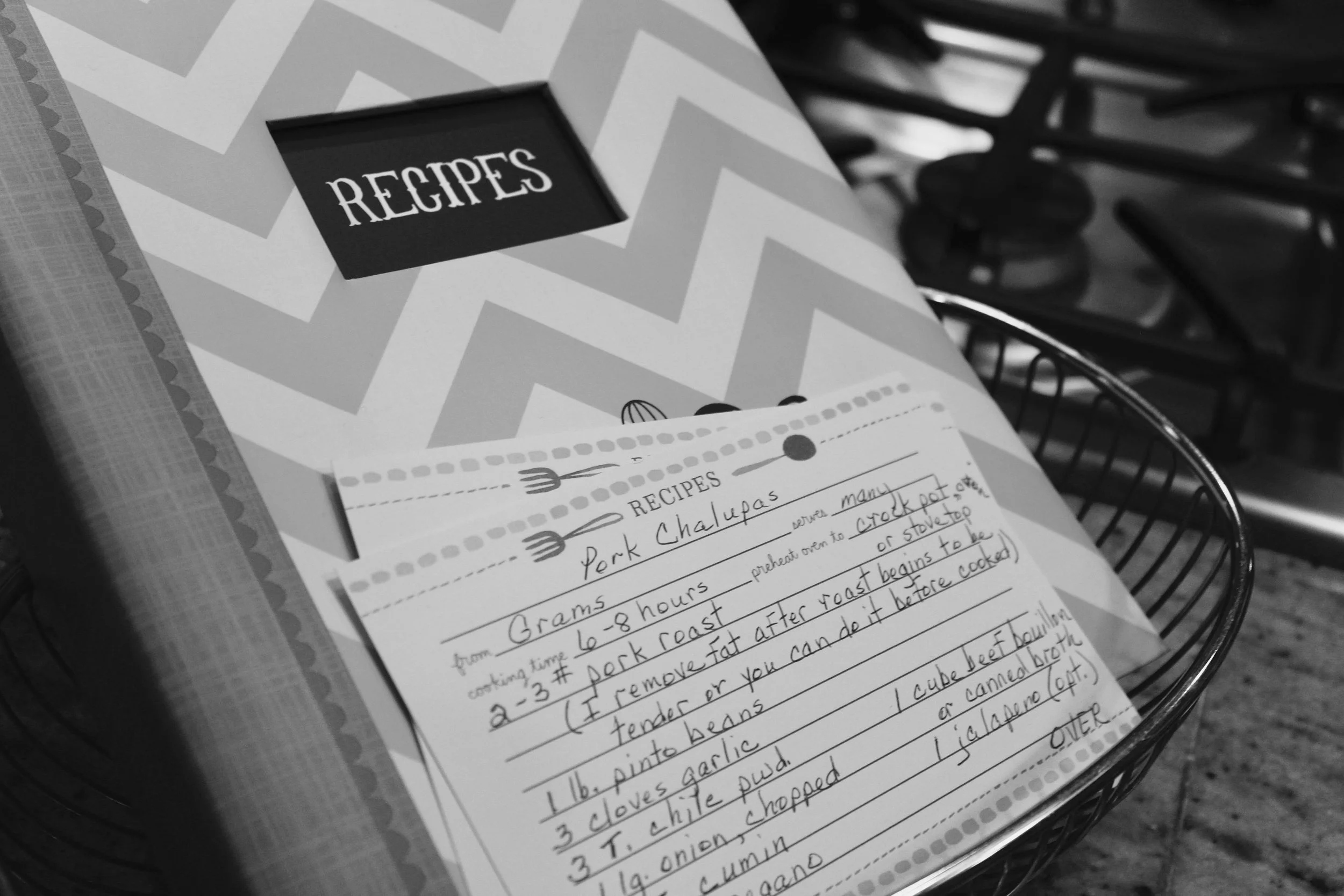
Type up the recipes or directions for each go-to dish or ready-to-eat option. Make the recipes and directions as clear as they need to be with step-by-step instructions for all the levels of cooking abilities in the household, so anyone can prepare them. Include ingredients, quantities, where to purchase them, and specific brands, if applicable, so you know what you need to shop for.
5. Binder or Digital Notebook
Create a binder or digital notebook that everyone who cooks can access with your go-to meals, ready-to-eat meals and snacks, and recipes or instructions. I use Evernote, which can be used in a browser or the app and shared with others.
6. Grocery Shopping List
Keep a grocery shopping list that everyone can add to when things get low. Use your binder to make sure you have everything you need, and include details about preferred brands and where to find them. Include in the binder a list of things like milk and bread that you always need to include on your grocery list. I use Asana for my grocery list, which can be used in a browser or the app and shared with others, but there are all kinds of household sharing tools out there.
Related Resource: My complete meal planning guide and worksheets are part of my Household Chores and Routines Workbook.